Keynote Speakers
Prof. Dr. Ahmed A. Kishk
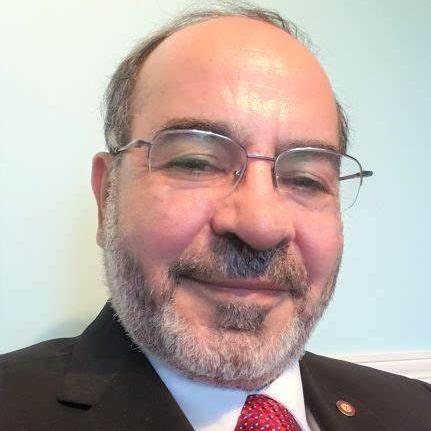
Professor and Tier I Canada Research Chair, Electrical and Computer Engineering, Concordia University, Canada
Fellow of IEEE, Fellow of Electromagnetic Academy, Fellow of Applied Computational Electromagnetic Society
Biography: Ahmed A. Kishk received a BSc in Electronics and Communication Engineering from Cairo University, Cairo, Egypt, in 1977 and a BSc. in Applied Mathematics from Ain-Shams University, Cairo, Egypt, in 1980. In 1981, he joined the Department of Electrical Engineering, University of Manitoba, Winnipeg, Canada, where he obtained his M. Eng. and Ph.D. degrees in 1983 and 1986. From 1977 to 1981, he was a research assistant and an instructor at the Faculty of Engineering at Cairo University. From 1981 to 1985, he was a research assistant at the Department of Electrical Engineering, University of Manitoba. From December 1985 to August 1986, he was a research associate fellow in the same department. In 1986, he joined the Department of Electrical Engineering, University of Mississippi, as an assistant professor. He was on sabbatical leave at the Chalmers University of Technology, Sweden, during the 1994-1995 and 2009-2010 academic years. He was a Professor at the University of Mississippi (1995-2011). He was the director of the Center for Applied Electromagnetic System Research (CAESR) from 2010 to 2011. He has been a professor at Concordia University, Montréal, Québec, Canada (since 2011) and Tier 1 Canada Research Chair in Advanced Antenna Systems (2011-2025). He was an Associate Editor of Antennas & Propagation Society Newsletters from 1990 to 1993. He is a distinguished lecturer for the Antennas and Propagation Society (2013-2015). He was an Editor of Antennas & Propagation Magazine (1993-2014). He was a Co-editor of the special issue, "Advances in the Application of the Method of Moments to Electromagnetic Scattering Problems," in the ACES Journal. He was also an editor of the ACES Journal in 1997. He was an Editor-in-Chief of the ACES Journal from 1990 to 2001. He was the chair of the Physics and Engineering Division of the Mississippi Academy of Science (2001-2002). He was a Guest Editor of the special issue on artificial magnetic conductors, soft/hard surfaces, and other complex surfaces in the IEEE Transactions on Antennas and Propagation, January 2005. He was a co-guest editor for IEEE Antennas and Propagation and Wireless Letter on the Special Cluster on "5G/6G enabling antenna systems and associated testing technologies." He was a technical program committee member for several international conferences. He was a member of the AP-S AdCom (2013-2015). He was the 2017 AP-S president.
Prof. Kishk's research interest is broad in Electromagnetic Applications. He has recently worked on millimeter-wave antennas for 5G/6G applications, Analog beamforming networks, Electromagnetic Bandgap, artificial magnetic conductors, soft and hard surfaces, phased array antennas, reflectors/transmitarray, and wearable antennas. In addition, he is a pioneer in Dielectric resonator antennas, microstrip antennas, small antennas, microwave sensors, RFID antennas for readers and tags, Multi-function antennas, microwave circuits, and Feeds for Parabolic reflectors. He has published over 485 refereed journal articles, 570 international conference papers, and 125 local and regional conference papers. He co-authored four books and 13 chapters and was the editor of eight books. He offered several short courses at international conferences. According to Google Scholar, his work was cited over 34060 with an H-index of 82. The bibliometric data for estimating the citation-based metrics were gathered on December 21, 2022. Prof. Kishk was ranked first at Concordia University, 23rd in Canada, and 401 worldwide. ScholarGPS has named Dr Kishk 2024 Highly Ranked Scholar in the top 0.05% of all scholars worldwide based on a Lifetime Rank of # 201 in Electrical and Computer Engineering, #4 in Antenna (Radio), # 8 in Dielectric, # 28 in Optical Engineering, and #67 in Microwave.
Prof. Kishk and his students received several awards. He won the 1995 and 2006 outstanding paper awards for papers published in the Applied Computational Electromagnetic Society Journal. He received the Outstanding Engineering Faculty Member of the Year in 1998 and 2009 and the Faculty Research Award for Outstanding Research Performance in 2001 and 2005. He received the Microwave Theory and Techniques Society Microwave Prize in 2004. He received the 2013 Chen-To-Tai Distinguished Educator Award from the IEEE Antennas and Propagation Society. In recognition, "For contributions and continuous improvements to teaching and research to prepare students for future careers in antennas and microwave circuits, Kishk is a Life Fellow of IEEE, Fellow of Electromagnetic Academy, and a Fellow of the Applied Computational Electromagnetics Society (ACES). He is a Life Fellow of the IEEE and a member of several IEEE societies, such as the Antennas and Propagation Society, Microwave Theory and Techniques, Electromagnetic Compatability, Communications, Vehicular Technology Society, and Signal Processing. He is a Senior Member of the International Union of Radio Science, Commission B.
Prof. Dr. Juin J. Liou
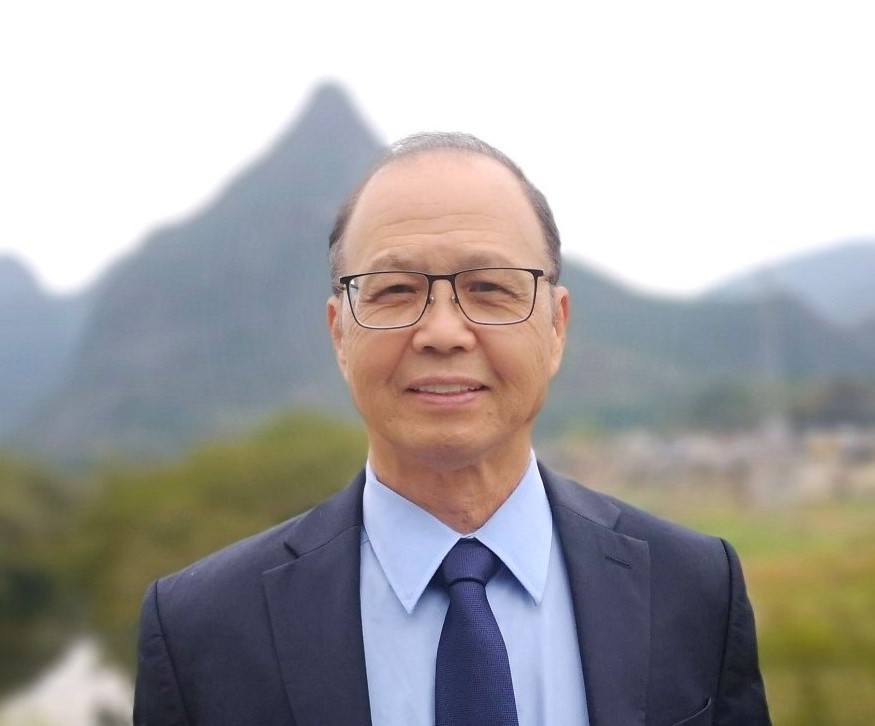
Abstract: Electrostatic discharge (ESD) is one of the most prevalent threats to the reliability of electronic components. This event can result in a very high current passing through the microchip within a very short period of time, and hence more than 35% of single-event catastrophic chip damages can be attributed to the ESD event. This is a problem with increasing significance in modern and future nanoscale technologies in the context of diminishing device dimensions. As such, designing on-chip ESD structures to protect integrated circuits against the ESD stress is a high priority in the semiconductor industry. The continuing scaling of CMOS technology makes the ESD-induced failures even more prominent, and one can predict with certainty that the availability of effective and robust ESD protection solutions will become a critical and essential factor to the successful advancement and commercialization of the next-generation CMOS-based electronics.
The development of high-speed and radio-frequency (RF) electronics went almost unnoticed until early 1980’s because, unlike Si VLSI, there were no mass consumer markets for such applications. This has been changed drastically in the past 20 years due to the explosive growth in the civil wireless communications and internets. The modern RF integrated circuits are typically operated in a voltage range of 2-4 V. This relatively low-voltage operation, together with the low tolerance of parasitic capacitance at the I/O pins and the continuing scaling in CMOS process, imposes certain challenges to the design and optimization of RF ESD protection solutions.
An overview on the ESD background will first be given in this talk. This is followed by presenting recent advancements and challenges on developing robust ESD protection solutions for modern low-voltage RF integrated circuits, as well as explorations and evaluations of ESD protection solutions in future technologies.
Biography: Juin J. Liou received the B.S. (honors), M.S., and Ph.D. degrees in electrical engineering from the University of Florida, Gainesville, Florida, USA in 1982, 1983, and 1987, respectively. In 1987, he joined the Department of Electrical and Computer Engineering at the University of Central Florida (UCF), Orlando, Florida where he held the positions of Pegasus Distinguished Professor, Lockheed Martin St. Laurent Professor, and UCF-Analog Devices Fellow. Dr. Liou is currently a chair professor at Shandong University of Science and Technology, China. Dr. Liou’s research interests are electrostatic discharge (ESD) protection design, modeling and simulation, and characterization.
Dr. Liou holds 30 patents and has published 13 books, more than 380 journal papers (including 25 invited review articles), and more than 280 papers (including more than 140 keynote and invited papers) in international and national conference proceedings. Dr. Liou has served as a technical reviewer for various journals and publishers, general chair or technical program chair for a large number of international conferences, regional editor (in USA, Canada and South America) of the Microelectronics Reliability journal, and guest editor of 7 special issues in the IEEE Journal of Emerging and Selected Topics in Circuits and Systems, Microelectronics Reliability, Solid-State Electronics, World Scientific Journal, and International Journal of Antennas and Propagation.
Dr. Liou received ten different awards on excellence in teaching and research from the University of Central Florida (UCF) and six different awards from the IEEE. Among them, he was awarded the UCF Pegasus Distinguished Professor (2009) – the highest honor bestowed to a faculty member at UCF, UCF Distinguished Researcher Award, IEEE Joseph M. Biedenbach Outstanding Engineering Educator Award in 2004 for exemplary engineering teaching, research, and international collaboration, and IEEE Electron Devices Society Education Award in 2014 for promoting and inspiring global education and learning in the field of electron devices. His other honors are Fellow of IEEE, Fellow of IET, Fellow of AAIA, Fellow of Singapore Institute of Manufacturing Technology, Fellow of UCF-Analog Devices, Distinguished Lecturer of IEEE Electron Device Society (EDS), and Distinguished Lecturer of National Science Council. He holds several honorary professorships, including the Chang Jiang Scholar Endowed Professor – the highest honorary professorship in China.
Dr. Liou had served as the IEEE EDS Vice-President of Regions/Chapters, IEEE EDS Treasurer, IEEE EDS Finance Committee Chair, Member of IEEE EDS Board of Governors, and Member of IEEE EDS Educational Activities Committee.
Prof. Dr. Weinan Gao
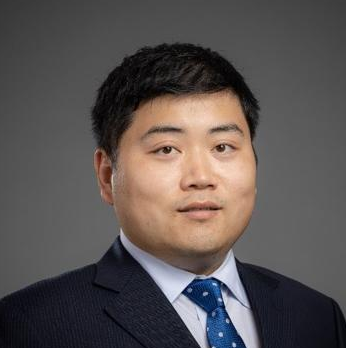
Professor, State Key Laboratory of Synthetic Automation for Process Industries, China
Speech Title: Integrated Learning and Adaptive Optimal Control for Connected and Autonomous Vehicles
Abstract: Adaptive optimal control of connected vehicles is an important research direction in intelligent transportation systems. This talk will explore new methods and practical applications in the field of learning-based adaptive optimal control. These methods are expected to reshape the operational paradigm of connected vehicles and autonomous driving vehicles in dealing with complex and changeable environments. We will review the core concepts of combining adaptive optimal control with reinforcement learning and explain how this fusion can produce robust and optimized control solutions.
Biography: Weinan Gao is a Professor at Northeastern University, an IEEE Senior Member, and a Visiting Professor at Mitsubishi Electric Research Laboratories in Boston, USA, and one of the top 2% scientists in the world according to Stanford University. He received his Ph.D. degree from New York University, USA. He has long been engaged in basic theoretical research on artificial intelligence, adaptive dynamic programming, optimal control and output regulation, and has carried out basic application research on intelligent connected vehicles, autonomous driving, power systems and other specific objects. He has published more than 60 papers in international journals such as IEEE Trans. Automatic Control and Automatica, including 4 ESI highly cited papers. He serves as an editor of international journals in the field of control and artificial intelligence, such as IEEE Journal of Automatica Sinica, IEEE Trans. Neural Networks and Learning Systems, and Control Engineering Practice. He has won several best paper awards at international conferences.
Prof. Dr. Francisco Falcone
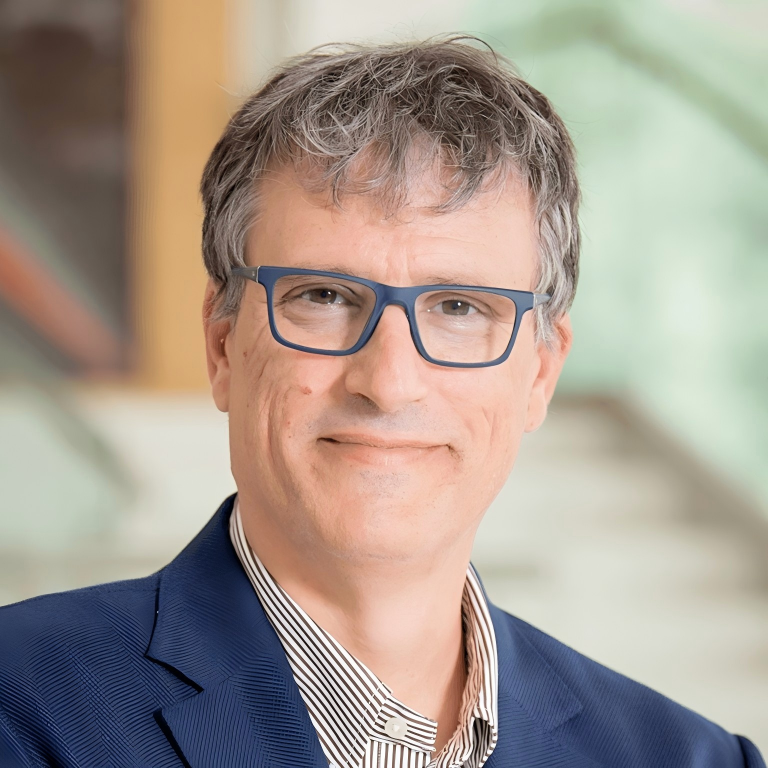
Full Professor, UPNA; Head ISC-UPNA; Distinguished Visiting Professor, EIC, TEC Monterrey
Speech Title: Wireless Systems to Enable Cognitive Cities
Abstract: Smart cities are evolving from reactive real time systems towards a paradigm in which cities become predictive and proactive, leading to the concept of Cognitive Cities. In order to provide these functionalities, different technological enablers such as AI/ML algorithms, unified data lakes, autonomus systems and evolved information and communication infrastructures are required. In this sense, wireless communication, power transfer and sensing systems play a key role in order to provide highly interactive and adaptive capabilities in the operational environments of the Cognitive Citie. In this presentation, the challenges and opportunities at the physical layer within the EM spectrum will be explored, towards the future implementation of 6G systems and beyond.
Biography: Francisco Falcone (Senior Member, IEEE) received the degree in telecommunication engineering and the Ph.D. degree in communication engineering from the Public University of Navarre (UPNA), Pamplona, Spain, in 1999 and 2005, respectively. From 1999 to 2000, he was a Microwave Network Engineer at Siemens-Italtel, Málaga, Spain.
From 2000 to 2008, he was a Mobile Access Network Engineer at Telefónica Móviles, Pamplona. In 2009, he cofounded Tafco Metawireless, a spin-off of UPNA (with EIBT national label), of which he was its first manager. In parallel, from 2003 to 2009, he was an Assistant Lecturer with the Department of Electrical and Electronic Engineering, UPNA, where he became an Associate Professor in June 2009. From 2011 to 2012, he was a Secretary at the Department of Electrical, Electronic and Communication Engineering, UPNA, where he was the Head of the Department of Electrical, Electronic and Communication Engineering from January 2012 to July 2018 and from July 2019 to November 2021. In 2018, he was a Visiting Professor at the Kuwait College of Science and Technology, Doha, Kuwait, for three months. He has also been with the Smart Cities Institute, Public University of Navarra, a multidisciplinary research institute with over 100 researchers, being the Head of the Institute, since May 2021, working on contextual and interactive environments solutions, through the integration of heterogeneous wireless communications networks, based on HetNet and the IoT. Since June 2022, he has been a Distinguished Visiting Professor with the Telecommunications School of Engineering and Science, Tecnologico de Monterrey, Monterrey, Mexico. Since September 2022, he has also been a Full Professor with the Department of Electrical, Electronic and Communication Engineering, UPNA.
He has over 600 contributions in indexed international journals, book chapters, and conference contributions. His research interests include computational electromagnetics applied to the analysis of complex electromagnetic scenarios, with a focus on the analysis, design, and implementation of heterogeneous wireless networks to enable context-aware environments. He has participated in over 110 public and private funded research projects. Dr. Falcone received several research awards, such as the CST Best Paper Award in 2003 and 2005, the Prize of the Official Association of Telecommunications Engineers for the Best Doctoral Thesis in 2005, the UPNA Ph.D. Award in Experimental Sciences from 2004 to 2006, the 1st Prize Juan López de Peñalver to the Best Young Researcher in 2010, the Real Academia de Ingeniería de España, the XII Talgo Foundation Award for Technological Innovation with the proposal “Implementation of an Environment for the Railway Ecosystem,” the ECSA-2 Best Paper Award in 2015, the Best Paper Award IISA in 2015, the ECSA Award-3 Best Paper Award in 2016, the ECSA-4 Best Paper Award in 2018, the Best Paper Award ISSI in 2019, and the IIoT 2020 Best Paper Award.
Prof. Dr. Ahmed Tayeb Denidni
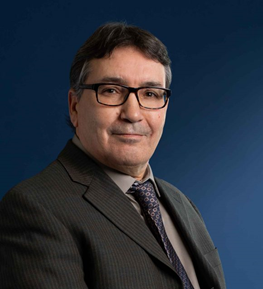
Professor, Institut National de la Recherche Scientifique (INRS), Université du Quebec, Montreal, Canada, IEEE Fellow
Speech Title: Reconfigurable Antennas for millimeter-wave wireless Communications
Abstract: Using engineered electromagnetic materials, novel reconfigurable antenna designs with advanced features can be developed and used us an enabling technology to improve the performance of future wireless communication, radar and space systems at microwave and mm-wave bands. These approaches are based on using advanced artificial periodic electromagnetic structures, including electromagnetic band gap structures, frequency selective surfaces and meta-surfaces. The objective is to design and implement new compact, low profile, and low-cost antenna systems with high performances in terms of beamforming capability, high gain, and efficiency. In this talk, I will first give a brief introduction on the wireless communication systems, presenting their potentials, evolution and challenges. Second, I will give an overview on periodic electromagnetic structures and their applications in advanced antenna designs. Third, to show the beamforming feature of these antennas, some examples of simulated and experimental results will be presented and discussed. Finally, concluding remarks will be given.
Biography: Prof. Tayeb A. Denidni (IEEE Fellow) received M. Sc. and Ph.D. degrees in electrical engineering from Laval University, Quebec City, QC, Canada, in 1990 and 1994, respectively. From 1994 to 2000, he was a professor with the engineering department, Université du Quebec in Rimouski, QC, Canada.
Since August 2000, he has been as a professor with the Institut National de la Recherche Scientifique (INRS), Université du Quebec, Montreal, Canada. He has founded RF laboratory at INRS, Montreal. He has a well-known expert in antenna domain. He served as a principal investigator on many research projects sponsored by numerous industries in telecommunications. He has co-authored more than 350 journal papers, 400 conference papers, 1 book and 12 book chapters. He has acquired international recognition for its innovative and pioneering work on frequency selective surfaces and their applications to reconfigurable antennas, beamforming systems, reflective indigent surfaces (RIS) and mm-wave antennas. He has been elevated to the grade of IEEE fellow for his contribution to frequency selective surfaces and their applications to reconfigurable antennas.
More will be updated soon...